 Ploughsoil
For UK detectorists
What did you just dig up?
Ploughsoil is a find-ID reference for British fields and beaches. Weigh it, measure it, and match it against charts built from museum and archaeological sources. Then record it properly.
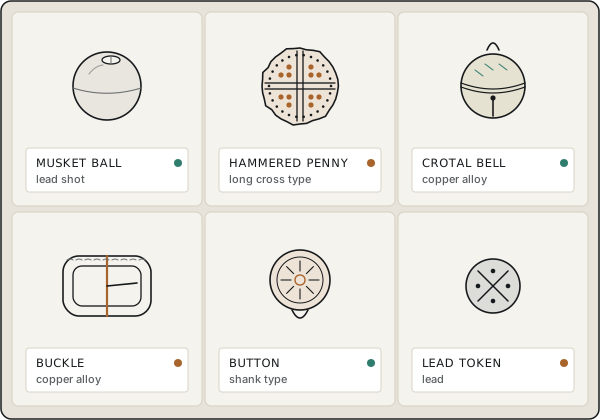
- MeasuredWeights and diameters you can check with scales and calipers.
- SourcedEvery figure is traced to the PAS, published archaeology or the law itself.
- RecordedEach guide ends with who to tell, and when you must.
Open a drawer
Four sections, numbered like a finds cabinet.
-
DRAWER 0113 GUIDES
Find ID
Measure it, date it, name it. Object-by-object keys.
-
DRAWER 028 GUIDES
Law & permission
Treasure, Treasure Trove, beaches and landowner agreements.
-
DRAWER 032 GUIDES
Getting started
Kit, target IDs and the habits that make good finds records.
-
DRAWER 042 GUIDES
Places & events
Beaches after storms, rallies and clubs.
Start here
25 sourced guides so far. These are good first reads.
-
Find ID · Lead shot
Musket ball size chart: identify lead shot by weight and diameter
Weigh it first. Then measure it. This chart turns grams into bore and an ideal diameter, and shows which guns the size points to.
6 MIN READ1 NOVEMBER 2026 -
Law & permission · Treasure Act
What counts as Treasure? The Treasure Act and the 2023 change
6 MIN READ1 NOVEMBER 2026 -
Find ID · Hammered coins
Hammered coins: how to identify medieval English silver
4 MIN READ1 NOVEMBER 2026 -
Getting started · Reading the numbers
Metal detector target ID chart: what the numbers mean
4 MIN READ1 NOVEMBER 2026 -
Places & events · Coast
Beach detecting after storms: why scoured beaches pay, and the rules
4 MIN READ1 NOVEMBER 2026
How we work
No guesswork dressed up as fact
A lot of find ID online is forum folklore. We go back to the sources instead. Read how Ploughsoil is made.
- Primary sources first. PAS guides and records, museum catalogues, excavation reports and the legislation itself.
- Numbers you can test. If we give a weight or diameter, we show where it came from and how to measure your own find.
- Our own drawings. Line drawings and scale bars made for Ploughsoil, so we never borrow photos without a licence.
- Report it. Recording turns a find into evidence. Every guide says who to tell.